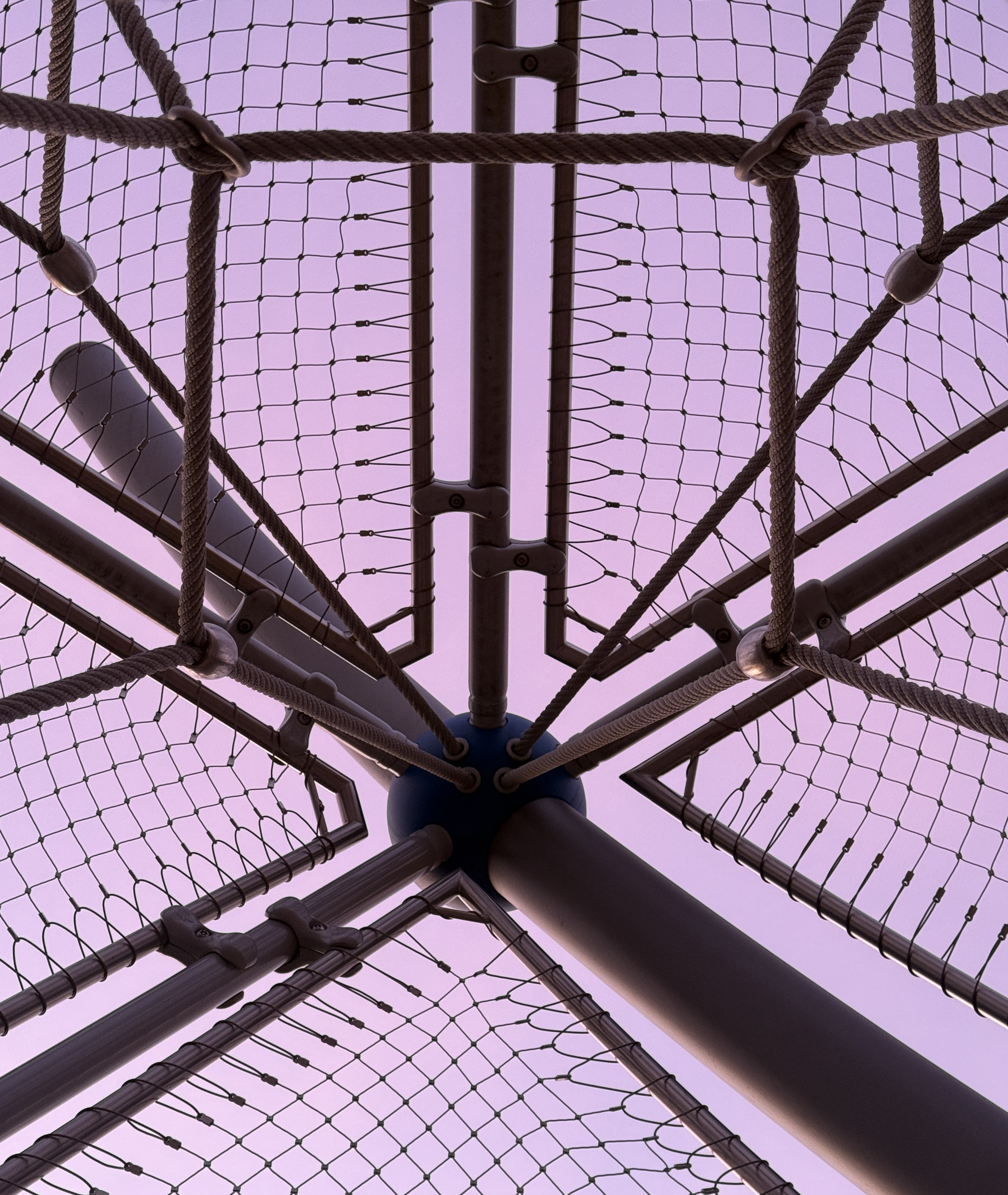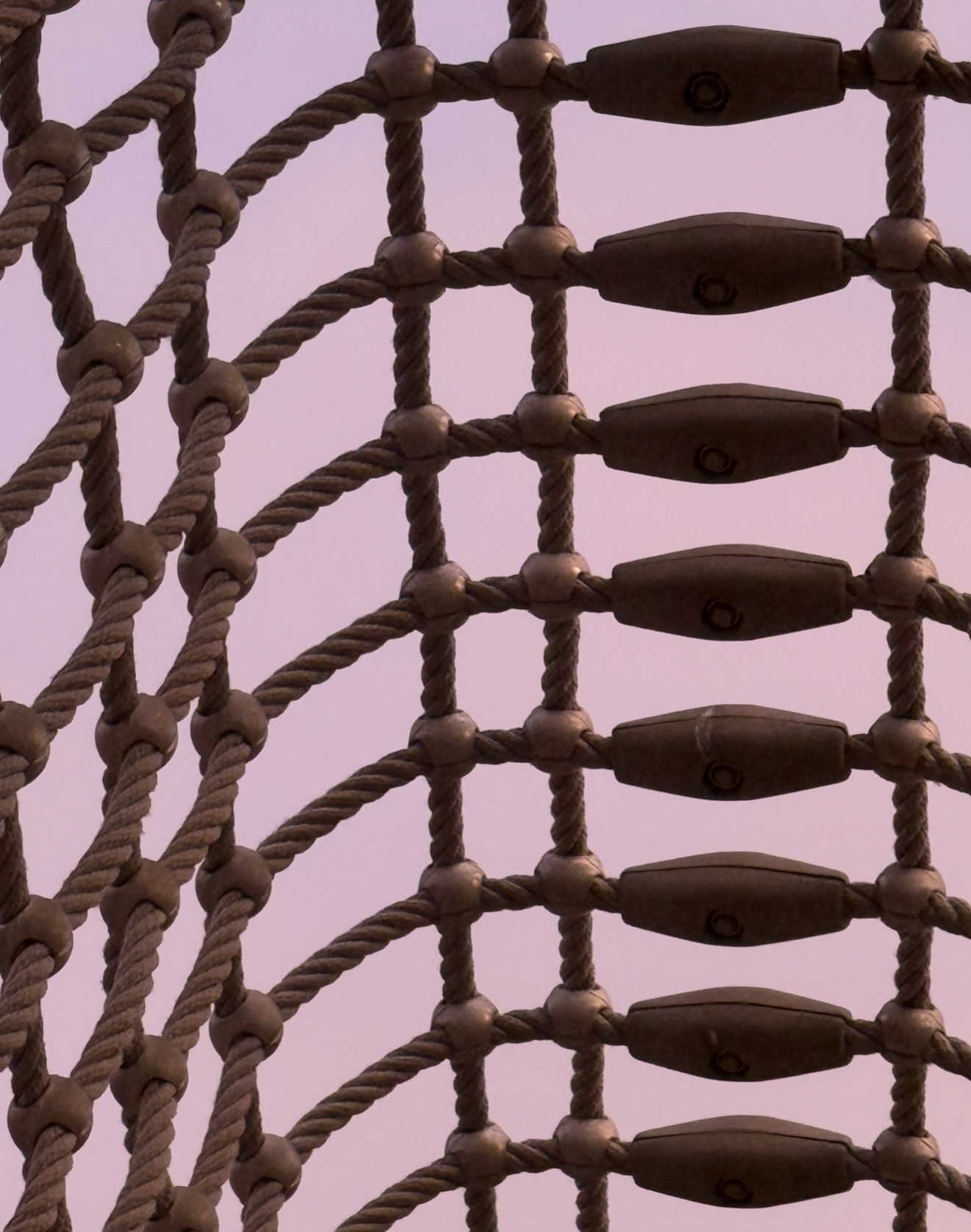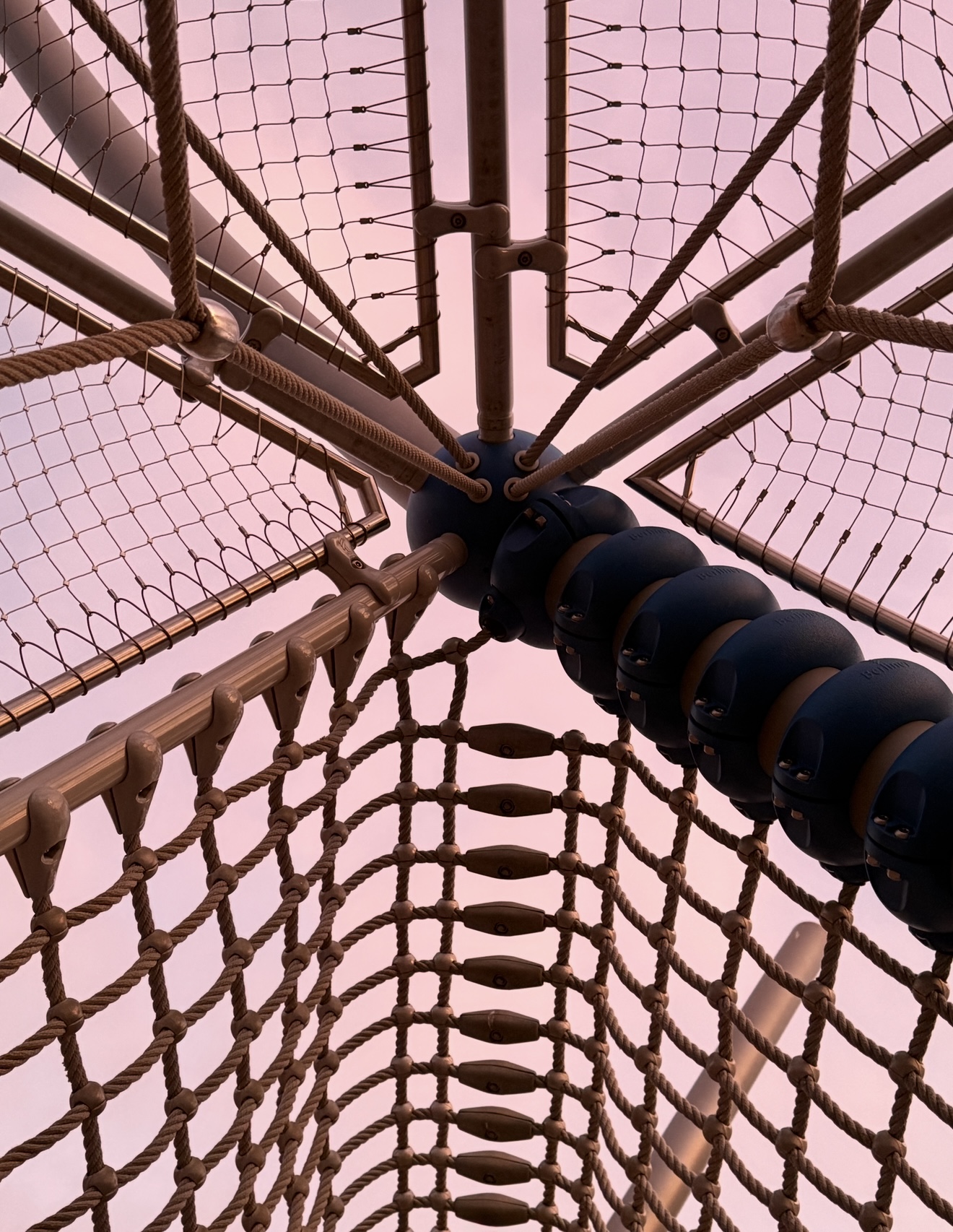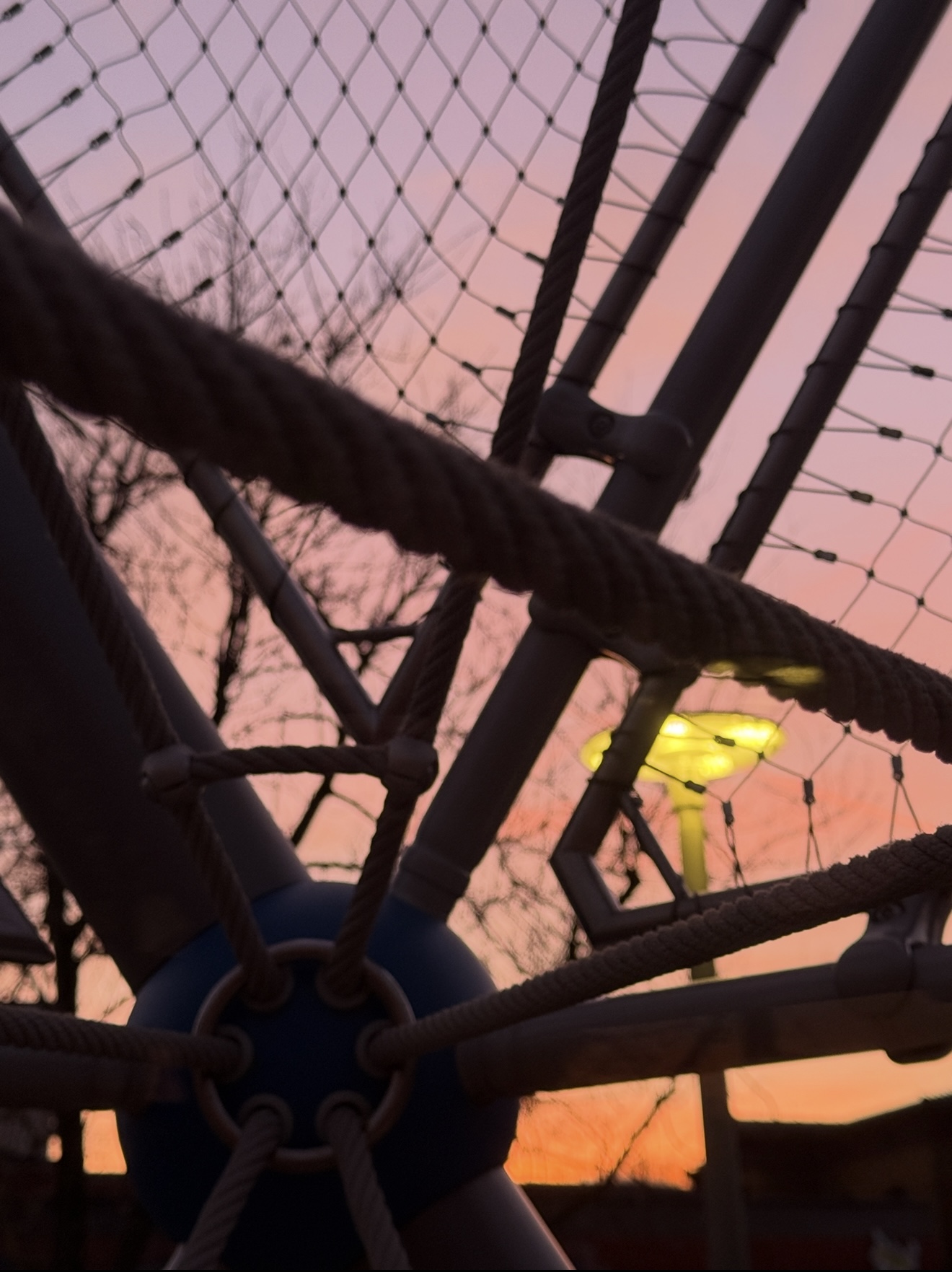
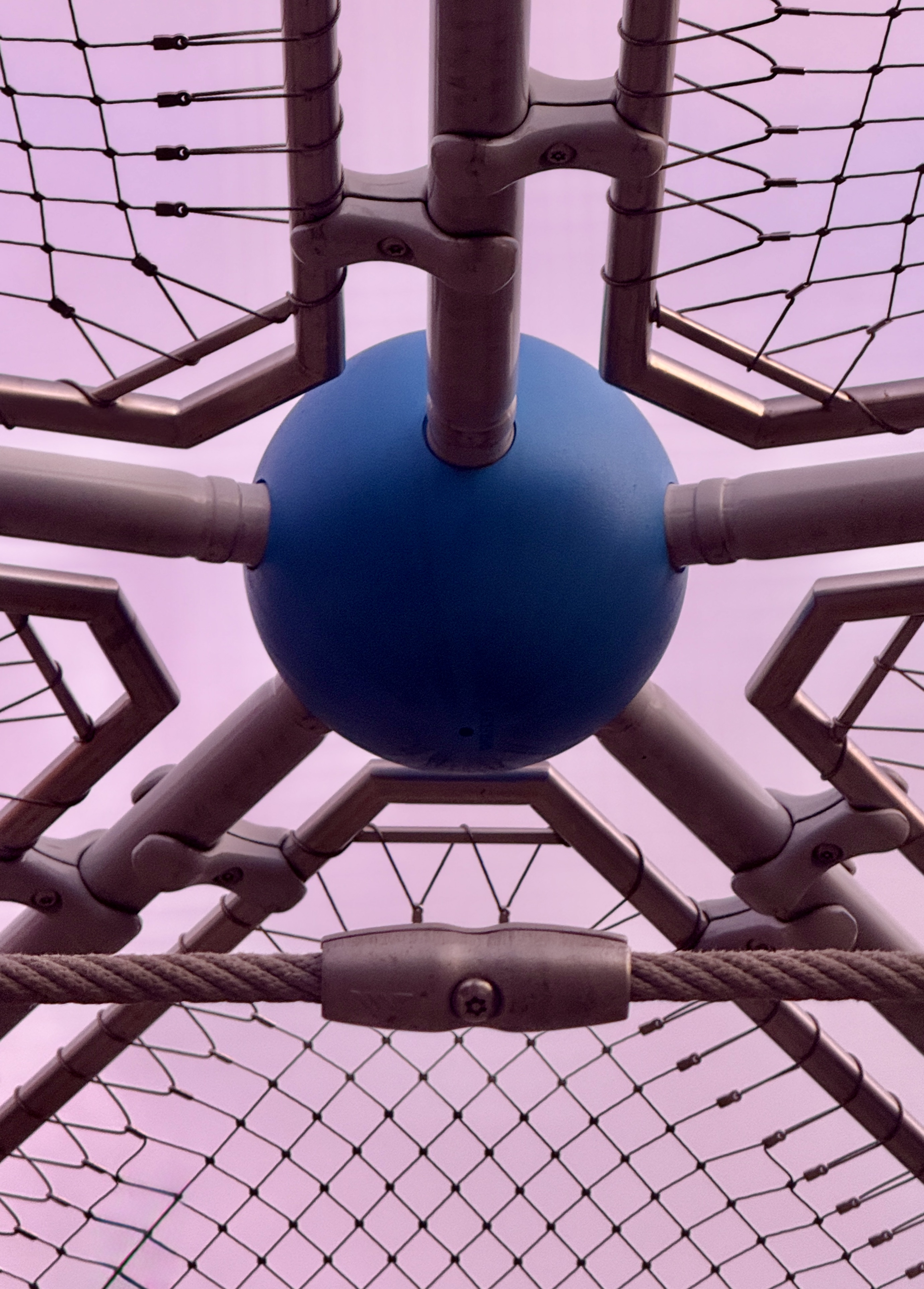
Within the wider context of an educational exterior, a playground climbing frame transforms into a study of symmetry, rhythm, and spatial tension — a form of “play architecture” in which grids and junctions create a network of order and movement. Through repeating patterns and radial connections, a utilitarian object becomes an abstract diagram of balance and flow, prompting reflection on the invisible frameworks that shape our perception of space and on how designed outdoor learning environments quietly teach structure, orientation and connectivity.