
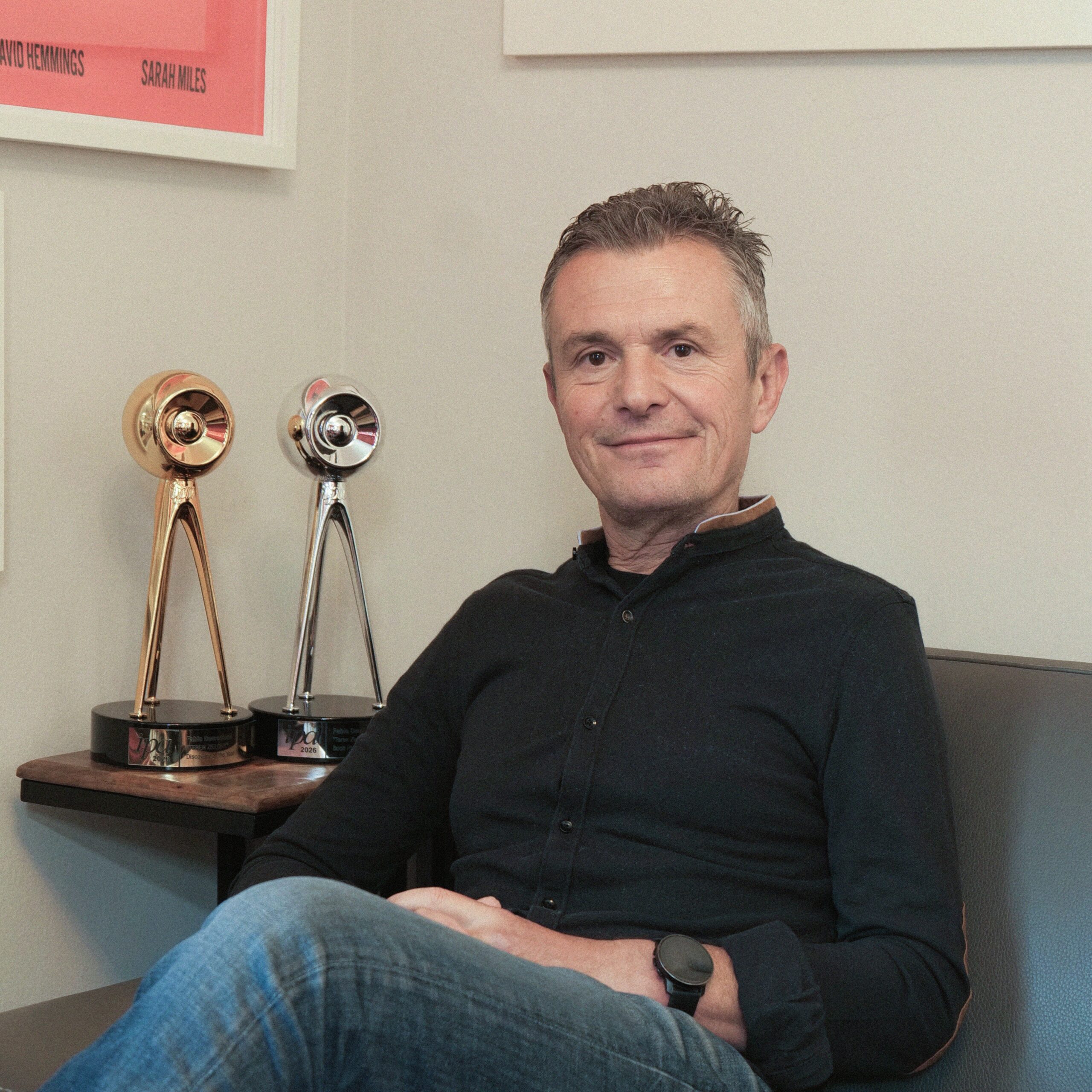
Q: Congratulations on receiving both the Discovery of the Year and Book Photographer of the Year awards at the 2026 IPA Awards. Your project, TEREN ZIELONY, brings together photographs made during two journeys to Poland, fifteen years apart. How did this project first take shape, and what made you feel there was a story worth returning to?
Teren Zielony is an intimate and personal travel diary. In 2008, I set off for Poland, driven by the desire to find traces of the dramatic events that had profoundly shaped the country’s history in the twentieth century: the Nazi occupation and Soviet domination. I thought I would find these traces in Jewish quarters, labour and extermination camps, socialist architecture, and religion, a central element of Polish identity.
Once there, I found myself facing a landscape enveloped in a still, wintry atmosphere, shrouded in silence and timeless beauty. What was meant to be a journey of historical and anthropological research soon turned into an inner journey. The silence of those places and the unexpected encounters affected me so deeply that I began to look beyond history, towards the emotions and personal reflections those places were able to evoke. The nature of the journey thus changed: it was no longer just about documenting a painful past, but about immersing myself in a space that spoke of memory, identity, and how the past continues to influence those who observe it.
When I returned in 2008, I was aware that I had taken some good photographs, but I knew I had not yet produced a finished body of work. I therefore decided to focus on just a few photographs, putting together a short portfolio and a small exhibition of around twenty images, which I printed myself in the darkroom.
It was only in October 2023, while scanning the complete collection of negatives in my archive, that those photographs resurfaced almost bychance. Among those images, I found some very interesting material, but not enough to create a coherent and fully developed body of work.
This prompted me to return to those places in the winter of 2023–2024, with the intention of picking up the same thread where I had left it fifteen years earlier. While in 2008 I had travelled through the southern regions of the country, setting off from Kraków towards the Tatra Mountains on the border with Slovakia, during that journey I crossed the central rural areas before heading north, as far as the border with Belarus and the Baltic Sea coast. This return was not simply a search for new images, but a genuine reconnection with an experience and a context I had already encountered. It was precisely this reconnection that allowed me to develop a consistent aesthetic, capable of linking my earlier work with my renewed observation of those places.
The greatest challenge was to rediscover that way of seeing. Over the years, I have changed considerably as a photographer, not so much in terms of my sensibility as in my photographic technique. I have almost completely abandoned black and white and now photograph primarily in colour.
Q: The title TEREN ZIELONY, Polish for “green terrain,” carries a sense of place, but your photographs were made during two winters. What does the title mean within the context of the project?
The title TEREN ZIELONY, which means “green area” in Polish, comes from the contrast between the Polish government’s political and economic narrative and my personal perception of that territory.
After the fall of the Berlin Wall and the dissolution of the USSR, Poland underwent a profound economic transformation and a period of significant growth. During the global crisis of 2008, the country was therefore defined by the government as a “green island”, an oasis of growth in the midst of a recession-hit Europe.
The title TEREN ZIELONY arises precisely from this contrast: on the one hand, the political and economic definition; on the other, my vision of a silent territory where, far from major urban centres, the landscape has not yet been affected by modernity and remains authentically “green”, rural, and connected to its own roots.
Q: You worked with analog cameras across both journeys. What draws you to analog photography for a project concerned with memory and the passage of time?
In 2008, I photographed almost exclusively on film and in black and white. I developed the negatives myself and printed the photographs in the darkroom. That was my natural way of photographing and experiencing photography.
When I returned to Poland fifteen years later, choosing to use film again was essential to maintaining continuity in the narrative. Analogue photography has a physical materiality, a waiting time, and a process that are perfectly connected to the idea of memory and the passage of time.
Returning to the same gestures, the same grain, and the same visual rhythm allowed me to bring the images from 2008 into dialogue with those from 2023, creating a temporal bridge where past and present merge.
Q: Looking back at the photographs made in 2008 and 2023, is there one image or encounter that has stayed with you more strongly than the others, perhaps because its meaning has changed over time?
Yes, there is one image I feel particularly attached to. I took it in 2008, in the south, in the Tatra Mountains on the border with Slovakia. It is a portrait of a man seen from behind, kneeling and praying in front of a
small roadside votive shrine.
Years later, that moment has taken on an even deeper meaning. At the time, I was struck by its intense spirituality and by the silence surrounding the scene, which seemed almost outside of time. Looking at it again today, the image appears to me as a perfect synthesis of the entire project, a silent symbol of spiritual resilience, quiet reflection, and an unchanging bond with one’s traditions and the land. This is precisely the photograph I chose to represent the project at the exhibition in Athens.
Q: Receiving recognition in two categories, particularly Discovery of the Year and Book Photographer of the Year, brings attention to a project developed over such a long period. What does this recognition mean to you at this stage of your photographic journey? Has seeing the work received by a wider audience changed your relationship with the project?
Receiving recognition in two such important categories is a source of immense satisfaction, and even today, I find it hard to believe. These awards bring great visibility to a long journey that began with the desire
to put my archive in order.
At this stage of my life as a photographer, receiving these two awards feels like a meaningful recognition of the dedication and time I have invested. Seeing the work embraced by such a wide audience has not changed my deep and intimate connection with the project, but it has given me the immense joy of knowing that these silent and personalstories can resonate with the sensibilities of many other people around the world.
After this important milestone, I hope to find a publisher who believes in the project and is willing to publish the book. After receiving this double recognition, finding a publisher would truly be the greatest joy of all.